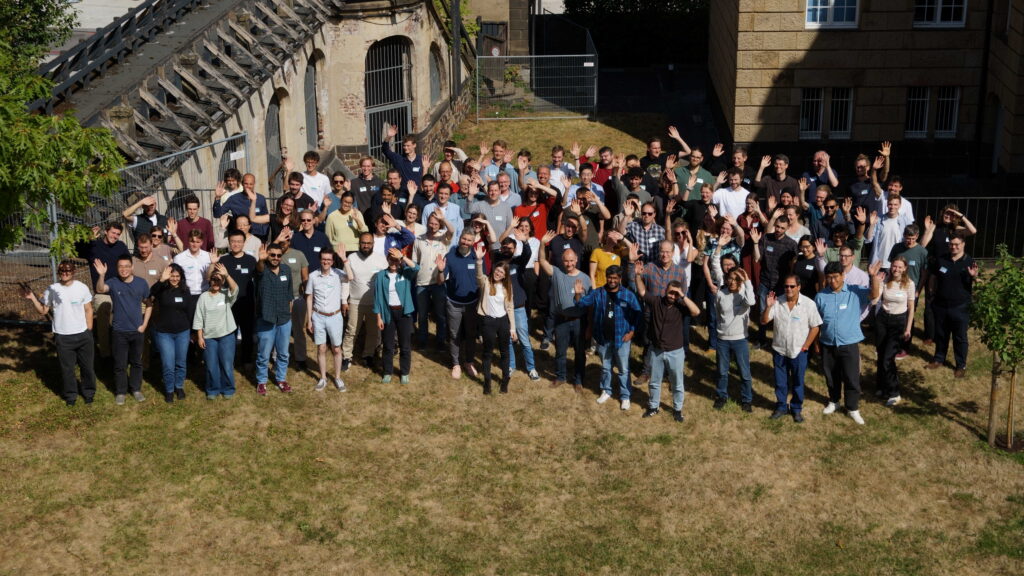
Members of the HClimRep project joined researchers from around the world in Bonn for MLESM 2026, a two-part event featuring a hackathon and a workshop in August. More than 100 researchers from the Earth system science and machine learning (ML) communities came together to explore how machine learning can help address emerging challenges in Earth system research.
The event was hosted by the Institute of Computer Science at the University of Bonn and supported by the Center for Earth System Observation and Computational Analysis (CESOC) and the HClimRep project.
The event consisted of two parts: a hackathon from 19 to 21 August, followed by a workshop from 24 to 26 August. Held for the second consecutive year, the hackathon brought participants together for three days of coding, experimentation, and collaborative work on concrete challenges at the intersection of machine learning, Earth system science, and high-performance computing. Members of HClimRep played an active role in organising the event and contributed as lecturers and tutors during the hackathon.
A challenge for the hackathon: Integrating SST into weather and climate models
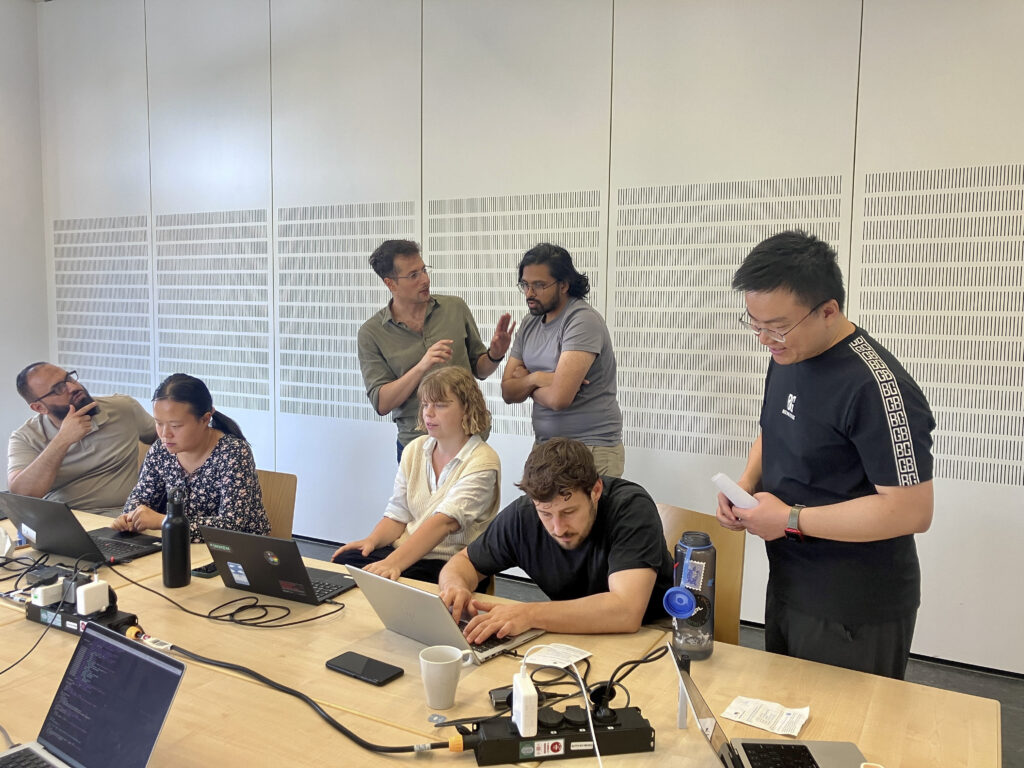
One of the five hackathon challenges was organised and tutored by researchers from the HClimRep project and members of the ESDE team from Forschungszentrum Jülich. The challenge, “Integrating SST into weather and climate models,” explored how sea surface temperature (SST) can be incorporated into a modern, data-driven weather model to better capture long-term warming trends.
Working with the WeatherGenerator model, the teams compared two different integration strategies and developed their own evaluation routines to assess their performance. The challenge was supervised by Savvas Melidonis, Jifeng Wang, Jehangir Awan, and Ankit Patnala. The model’s response to the integrated information was measured and successfully analysed.
Input from the experts
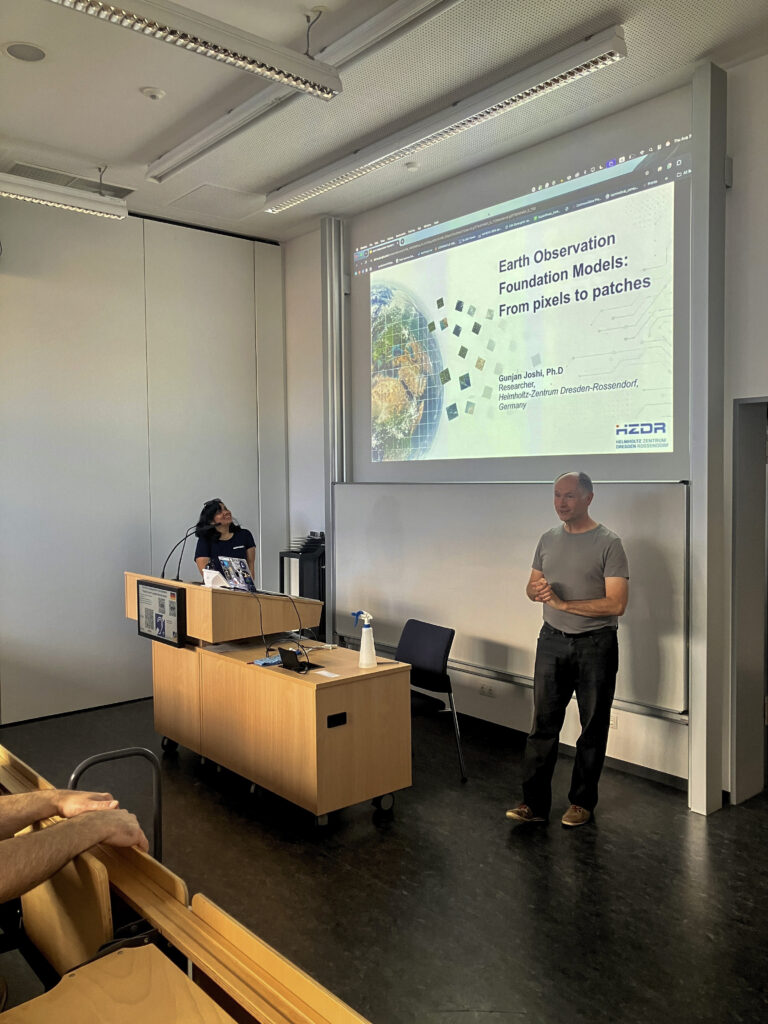
The hackathon was accompanied by a series of lectures, including a contribution from Martin Schultz, lead PI of HClimRep, on the fundamentals of conventional and machine-learning-based weather modelling. This and other sessions provided participants with additional background and context for their three days of hands-on coding and data analysis.
Connecting research through weather and climate
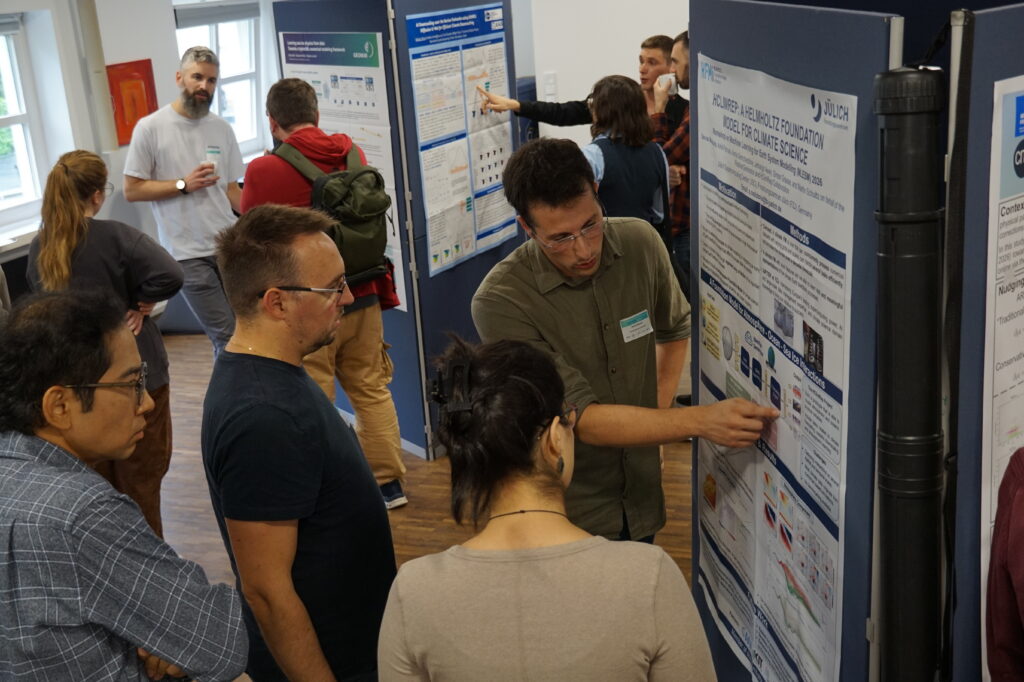
Following the hackathon, the fourth MLESM workshop provided a platform for scientists to present their latest research, exchange ideas, and discuss the challenges and opportunities of machine learning for Earth system modelling. Topics covered a broad range of areas, including machine-learning-based numerical weather prediction, high-resolution forecasting, climate models, Earth system components, observations, foundation models, and the evaluation of AI-based models.
Savvas Melidonis, Head of the HClimRep project, presented a poster entitled HClimRep, a foundation model for capturing atmosphere, ocean, and sea-ice interactions. The poster highlighted the project’s work on developing the first foundation model for climate science that simultaneously integrates atmospheric, oceanic, and sea-ice data and observations.
The HClimRep consortium also contributed an oral presentation on HClimRep-Ocean (OceanRep), delivered by Kacper Nowak, a PhD student at AWI.
Each time, the MLESM event reflects the growing interest in machine learning as a tool for weather and climate research, while also highlighting the importance of interdisciplinary collaboration between the Earth system science, mathematics, and computational science communities. For researchers from HClimRep, this year’s event provided another opportunity to contribute to these discussions, share their work, and exchange perspectives on the development of AI-based approaches for climate modelling.